Insights: Case Studies

Laser Cutting Scrap Reduction

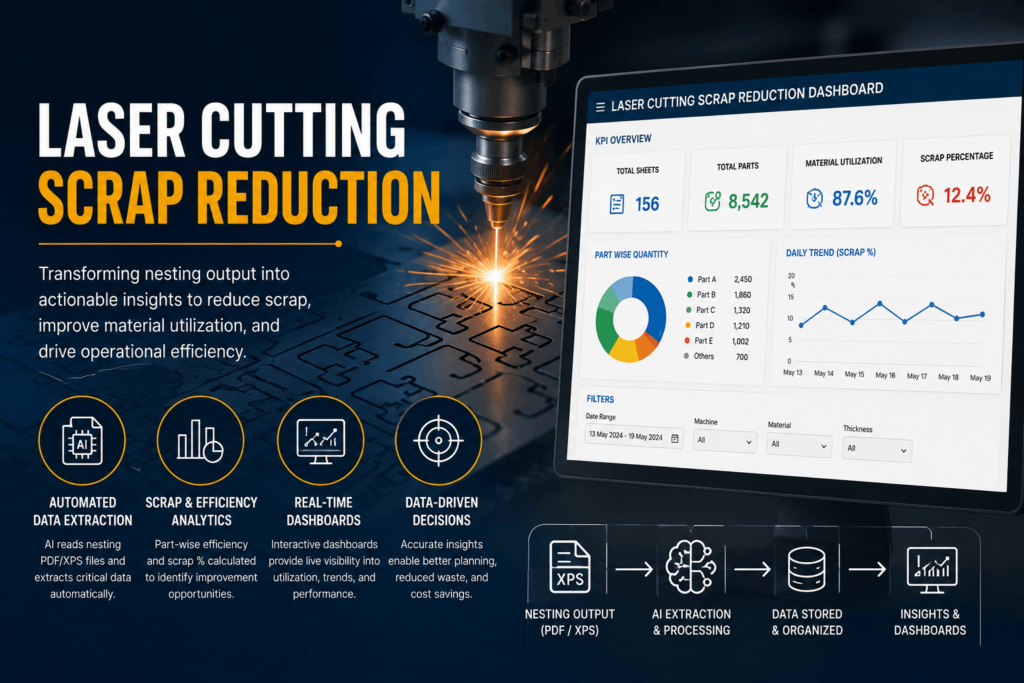
Manual analysis of nesting files limited visibility into material utilization, scrap trends and cutting efficiency.

Laser Cutting Scrap Reduction

Laser Cutting Scrap Reduction

Manual analysis of nesting files limited visibility into material utilization, scrap trends and cutting efficiency.

Problems at hand:

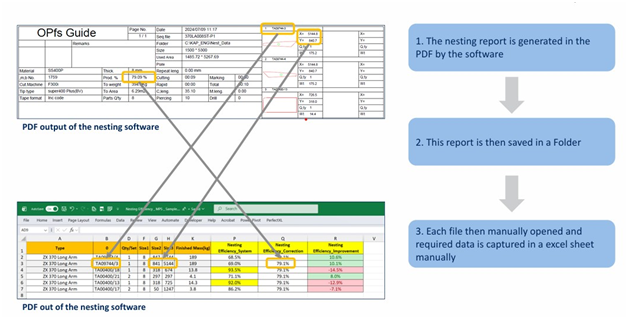
At an excavator manufacturing company based in West Bengal, laser cutting operations generated nesting output files containing critical production data such as part quantities, material utilization, and scrap percentage. Since this information was manually extracted from PDF/XPS files and maintained in Excel, the process was slow, error-prone, and difficult to scale. The absence of automated analytics limited visibility into scrap trends, nesting efficiency, and material utilization, resulting in missed opportunities to improve productivity and reduce raw material costs.
Laser Cutting Scrap Reduction Current Process Flow

The Intervention:

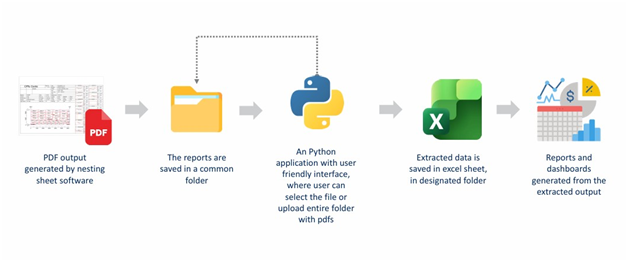
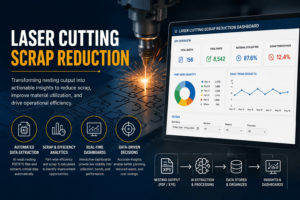
The manual data extraction process was automated using a Python-based application that reads nesting PDF/XPS files and extracts critical production data. Users can process individual files or complete folders, with the extracted data automatically saved to Excel for generating dashboards on material utilization, scrap trends, and cutting efficiency.

Benefits:

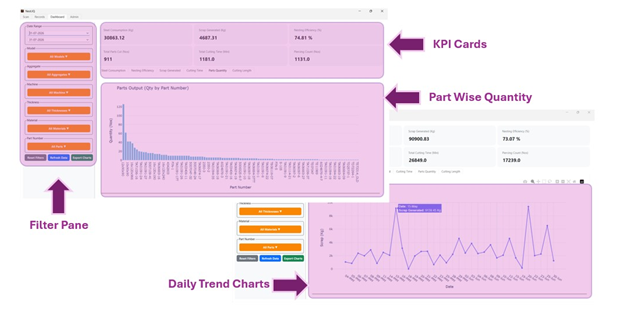
Real-time dashboards provided complete visibility into laser cutting operations through KPIs, part-wise production analysis, and scrap trend monitoring. Interactive filters enabled detailed analysis by machine, material, model, and thickness, helping production teams improve material utilization, reduce scrap, and optimize nesting performance.

Take the next step with us today!

Contact our specialists for more information

Related Case Studies